
May 2026

The account of Ian Dury’s evacuation with his mother down to his grandparents’ home at Pentillie in Mevagissey provoked a fair amount of interest locally. In that article (see March blog) I promised to cover a few more of Cornwall’s famous evacuees. So this month I thought we’d touch on the stories of four more.

David Kimche was born on 14th February 1928 in Hampstead, London, the youngest of nine siblings in a Jewish family descended from Swiss aristocratic roots. During his childhood the family moved to Switzerland returning to London just before the outbreak of World War Two. When war was declared David, with his brother Jon, was evacuated to Redruth and they were billeted with a family living in Clinton Road. The boys attended Redruth Grammar School.
After the war David made Aliyah in 1947 and took part in the War of Independence in 1948, fighting in Jerusalem where he was wounded. Having originally gone to Palestine as a university student, he joined Mossad in 1953 and soon became the department head of ‘Tav’ – responsible for intelligence and diplomatic relations. He had a stunning career as a spymaster and diplomat rising through the ranks to become the deputy director of Mossad. One of his first successes was the exposure of Avri Elad, the Israeli intelligence officer who betrayed his comrades in Egypt. David was credited with being largely responsible for Israel’s diplomatic and military overtures to Africa from the late 1950’s. He was heavily involved in Operation Wrath of God, the scheme to eliminate the terrorists who had murdered eleven members of the 1972 Israeli Olympic team in Munich. He was an expert at back-channel diplomacy when all else seemed to fail and prepared the groundwork for the Camp David accords (1978) and the Egypt-Israeli peace treaty of 1979. David left Mossad in 1980 becoming Director-General of the Ministry of Foreign Affairs until 1987. He was the link between the US and Iran during the controversial Iran-Contra scandal of 1985, a role which probably cost him getting the top job of Head of Mossad. In 1987 he was appointed Ambassador at Large of the State of Israel. He also wrote extensively, sometimes co-authoring with his brother Jon. In later years he worked for peace believing Israeli and Palestinian could live in peace side by side.

He married twice having four children. He was survived by his second wife Ruth when he died of brain cancer on 8th March 2010. He was buried at Kibbutz Shfayim. He was known as a man of integrity by politicians across the political divide and described as a compassionate and caring leader for his subordinates. He was described as the ultimate intelligence man and the Israeli press dubbed him “Israel’s James Bond” on his death.
He never forgot his stay as an evacuee in Cornwall and when in the 1970s his host family holidayed in Israel he took time out to act as their guide showing them the
sights of Tel Aviv and Jerusalem.
Harold Pinter was born on 10th October 1930 in Hackney, London, the only child of British Jewish parents of Polish/Ukrainian descent (when those countries were part of the Tsar's Russian Empire). He lived with his parents at 19 Thistleware Road. When the Second World War came Harold was evacuated with 23 other pupils from his school including Ken Wiseman, Ken Wybrow and Harold Cohen along with teachers Mr & Mrs Norton to Caerhays Castle, near Gorran, on the south coast of Cornwall. Harold was then aged nine and later described himself at that time as a “morose little boy”.

Harold was photographed with some of the other boys in the grounds of the castle where it is believed he began running, later becoming a sprinter for his grammar school. He was also introduced to cricket. It is believed he returned to London sometime in the second half of 1941, though was evacuated again to Yorkshire where his appreciation of cricket was greatly developed. At the age of 12 he also began writing poetry.
He had returned to London by 1944 to attend Hackney Downs Grammar School and was there through the V1 and V2 attacks (though some sources confuse this with the Blitz of 1940 when he was in Cornwall).

He became a playwright, screenwriter, director and actor. He wrote 29 plays including ‘The Birthday Party’ (1957), ‘The Homecoming’ (1964) and ‘The Betrayal’ (1978). He also wrote 21 screenplays including ‘The Servant’ (1963), ‘The Go Between’ (1971), ‘The French Lieutenant’s Woman’ (1981), ‘The Trial’ (1993) and ‘Sleuth’ (2007). He received the CBE and in 2002 the late Queen Elizabeth II made him a Companion of Honour. He won the Nobel Prize for Literature in 2005.
In 1956 he married the actress Vivien Merchant with whom he had one son Daniel Brand Pinter born in 1958. The couple divorced in 1980 and he married Antonia Fraser, the historian, with whom he had been having an affair for some time. His son fell out with him over the divorce and the two never reconciled. However, Fraser wasn’t the only affair he had had. He died in Hammersmith Hospital of cancer on Christmas Eve 2008. One obituary acknowledge that while he was a great writer, he was personally immensely flawed and his moral compass was deeply fractured. He had renounced his Jewish religion after his Bar-Mitzvah.
Pinter never spoke fondly of his time in Cornwall recalling being with another boy in the group at Caerhays Castle when the boy was told his parents and baby sister were killed in one fell swoop by a bomb in London. “It was difficult to appreciate what death was,” he said. “At nine to hear that your parents and sister are dead, he couldn’t take it in.” Some biographers have attributed Pinter’s wartime experiences as an unhappy, only child missing his parents as being the creative force for the angst and torment that marks so much of his work.

Terence Frisby was born on 28th November 1932 in New Cross, London. His father worked on the railways. On 13th June 1940 Terry was evacuated, aged seven, with his older brother Jack, aged eleven. His mother had written and addressed a postcard with two gaps on it. One for them to fill in the address of where they ended up, the second to use their secret code – one kiss would mean it’s horrible, two kisses that it was okay, and three that it was really nice.
Their school arrived at Liskeard Station where they were taken to a hall and fed. They were then bused out to the village of Dobwalls where they stood in a hall and locals came and chose them. When a middle-aged woman chose Terry he piped up that she had to take his brother as well as their mum had told them they had to stay together. “Well, if your Mum said, then that’s got to be right, then,” said the kindly voice who then took both brothers back to her home at 7 Railway Cottages, Doublebois. This was home to a Welsh couple, ‘Uncle’ Jack Phillips, a former miner, and his wife ‘Auntie’ Rose. Jack had been one of only 17 survivors out of 1,000 at the massacre of the Welsh at Mametz Wood during the Battle on the Somme in the First World War.
The boys thought they had arrived in heaven with a station and the mainline railway at the foot of the garden, set in the countryside with fields and woods and a river down the hill. The only strange thing was an outside lavatory at the bottom of the garden. They put 91 kisses on the postcard. Still, their mother turned up the following week to check all was satisfactory.
Terry recalled life in the rural setting with fondness telling of his adventures, of the fight between the Vackies and the Village Kids, being caught with Auntie Rose in Plymouth during the bombing and the arrival of the black GI’s up at the big manor, Doublebois House.
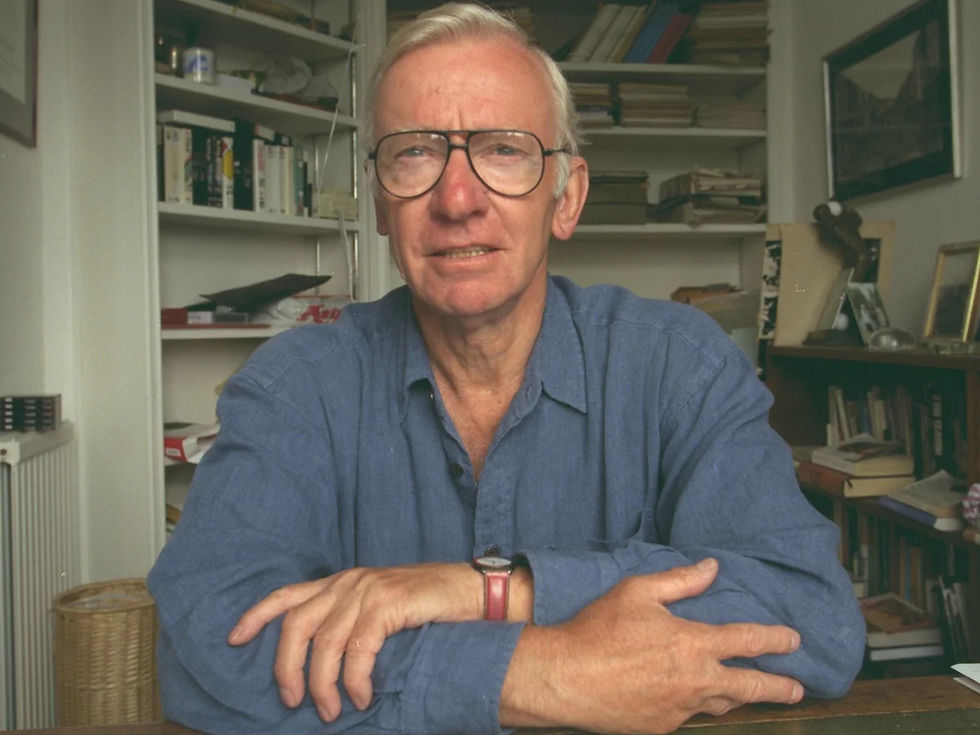
Terry became a playwright, actor, director and producer. He was the playwright for “There’s A Girl In My Soup” (1966) – London’s longest running comedy on stage. He also wrote TV comedies such as “Lucky Feller” (1976) and “That’s Love” (1988-92) and even appeared on Play School under the name Terence Holland. He appeared as an actor in “Raising The Wind” (1961) and “Carry On Cruising” (1962).He also wrote a radio play of his wartime experiences “Just Remember Two Things” which was to morph into the stage play “Kisses On A Postcard” (2004) and a book intended to raise the play’s profile “Kisses On A Postcard” (2009).
Terry had one son, Dominic Frisby, who became an author, comedian and voice over artist. Terry later became a founder member of Families Need Fathers. He died on 22nd April 2026 aged 87. His account of life as an evacuee in Doublebois is well worth the read.

Mary Hunkin (nee Chamberlaine) was born on 29th October 1939 in Battersea, London, the sixth child in a family that eventually had eight children. When she was about 18 months old the family made their way to the communal air raid shelter on Wandsworth Common and on their return found their red brick house was destroyed by a German bomb. The family only managed to retrieve a few possessions from the rubble and were put on a lorry and driven to Cornwall. They were rehoused by the Salvation Army in Lundy Lodge, a chalet type home overlooking Lundy Bay on the north Cornish Coast between Polzeath and Port Quinn. Mary remembered going to some kind of nursery school held on the beach in Polzeath as well as walking down the rugged path to Lundy Bay itself. She could also recall the lorry driving past Lundy Lodge taking Wrens to work in a cliff top lookout. They were in fact working in the quadrant shelter for the bombing range in the bay.
The family returned to London once the Blitz was over and lived for a while in a ward on an upstairs floor of a bombed out hospital. When the V1s and V2s started falling on London the family evacuated again to Cornwall taking up residence at Silver Hill Cottage just outside Brill near Constantine. They rented the cottage from the farm. It had an earthen closet for a toilet and a well in the garden for drinking water. They received milk straight from the farm.
Mary’s memory of school in Constantine was of all the classes in one big room sat on the floor. She recalled older girls cooking stew once a week and also heating hot milk on a pot-bellied stove in a large, long-handled saucepan. She also remembered there was a playing field opposite the school. Mary appears in a class photo from 1945.
The family were eventually evicted for non-payment of rent and returned to live in Chelsea. They returned to Cornwall once more just after the war living at Riverside Cottage at Buryas Bridge on the Land’s End road out of Penzance. The cottage had a black range but no electricity or running water. When Mary was nine her mother fell pregnant with her ninth child but on 6th June 1949 her mother died in childbirth. The baby died in the cottage and her mother rushed to Penzance Hospital died there. She was aged 37.
Mary went with her youngest sister Janice to live with relatives in Essex and while this was not a happy experience she did begin to progress at the 14th school she had attended thanks to two members of staff who took an interest in her. She went on to train as a PE teacher at Chelsea Women’s PE College at Eastbourne where she was introduced to the sport of trampolining. She excelled and soon became the club captain. She began competing across the country and won county and regional titles making her way into the British team where she also became captain.
In 1962 she was the runner up at the European Ladies Championship in Germany. She won the International Ladies Championship in Emmenthal, Switzerland.
In 1963 she won the British Ladies Championship at the Royal Albert Hall being presented with the winner’s plaque by the Duke & Duchess of Devonshire. She went one better in Ludwigshafen am Rhine, Germany, by winning the European Championship being presented with a bronze stag trophy. She also won the Welsh Championship and the Southern Counties Championship. The Guiness Book of Records for 1963 lists Mary as having won 12 titles in the one year, though some are printed with a misprint saying just two!

In 1964 she returned to the Royal Albert Hall and again won the British title, the trophy presented on this occasion by American George Nissen, the inventor of the modern trampoline. She also featured in an episode of the ITV programme ‘Seeing Sport’.
However by this time Mary was teaching full time, had married Cornishman Barry Hunkin from Tregiskey between Pentewan and Mevagissey on 28th December 1963, and as the sport was amateur was having to finance all her coaching sessions and travel to competitions so she took the decision to stop competing at the highest level. Her success was probably unparallelled until the modern era when gymnasts like Claire Wright dominated the Nationals and Bryony Page won gold for Britain at the 2024 Olympics in Paris.
Two daughters followed and a career in psychology after Mary gained a First Class Honours degree from the Open University and further training at the Tavistock Clinic. She worked for the police service, the prison service, probation services, schools, colleges and businesses, the Industrial Society and US airbases in East Anglia. She was invited to join Mensa where she recorded an IQ of 153. (For comparison, Stephen Hawking’s IQ was 156.) She moved with her husband Barry back to Cornwall in March 2000 where in 2006 a brain haemorrhage and in 2023 when her aorta ruptured doctors didn’t expect her to survive either episode. She did! She eventually died peacefully in her sleep in September 2025.
After years of ardent atheism Mary had begun a spiritual journey and eventually accepted Christ as Saviour giving her a peace and a hope in her final years. It was my privilege to give the eulogy at her Thanksgiving Service.
So next time you gaze at photographs of the myriad of evacuees who spent their wartime in Cornwall, just pause for a moment and wonder what became of them. You never know – they might have quite a story to tell. If you know of any more “famous evacuees” in Cornwall please leave a comment in the box at the bottom of the page.
Until next time, Shalom.


Comments