
March 2026
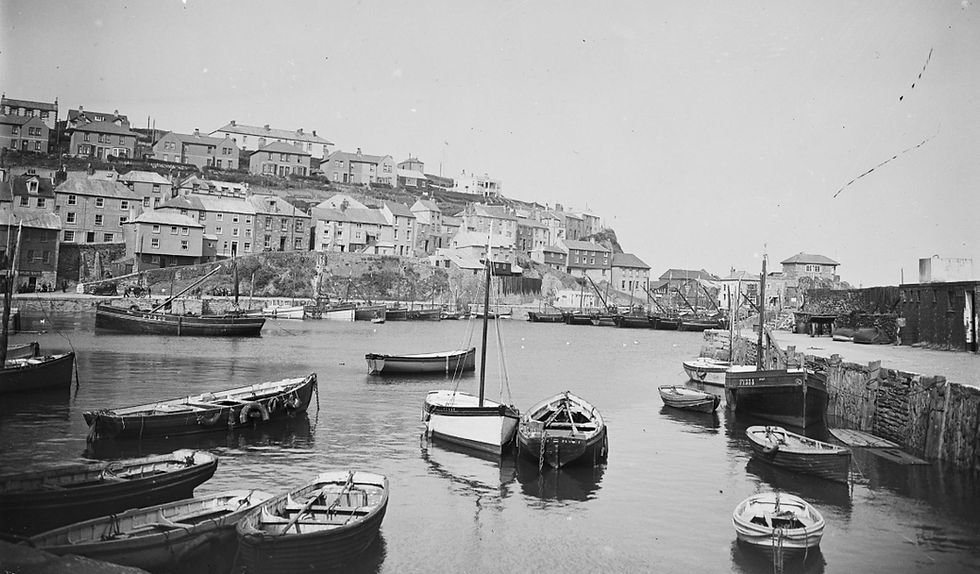
Cornwall saw several waves of evacuees. The first to arrive came as part of Operation Pied Piper over the weekend that Britain went to war, September 1st-3rd. During the Phoney War when, apart from at sea, not a lot seemed to be happening in western Europe, many drifted back to the cities they had come from – in Cornwall’s case, London. A second wave came in June 1940 when after the fall of France invasion seemed imminent and both the cities as before but also the towns on the south-eastern coast of Britain were emptied of their children. Cornwall received a third wave in the spring of 1941 when the Blitz on Plymouth and Bristol resulted in hundreds more children coming into the county. A final wave came in the summer of 1944 when the V1 doodlebugs and the V2 rockets began to wreak death and destruction on London and the south-east once more.
Typical of the places in Cornwall that received evacuees was Mevagissey, a small fishing harbour on the south Cornish coast. Renowned in the 1930s for its pilchards, the livelihoods of most in the village were connected to fishing and the associated industries.

On Friday 1st September the train from Paddington bringing over 500 children from four or five schools in the borough of Marylebone – all within a 30 minute walk of Paddington – arrived at St Austell Station at 3.10pm half an hour ahead of schedule. The children were destined for a number of surrounding villages as well as the town itself. They filed into the bus depot and 59 with their teachers were put aboard a Western National Bus to drive them to Mevagissey. They were greeted by the Women’s Institute who along with Mr D Mann and Mr WJ Clark assisted in allocating the children to their billets.
Many of their names can be found in the list I have included in my Gorran Haven & District War Diary (print edition), though that is by no means an exhaustive list. It seems they soon settled into life in the village with the local press reporting just one month later that “Mevagissey evacuees from Paddington gave songs and recitals at a musical service as part of the harvest festival at River Street Methodist Church.”

The St Austell Gazette of 6th March 1940 carried a report that many of them had appeared in a play called “Buttons” written by their evacuee teacher Miss Josephine Jones and performed in the Town Hall raising funds for the River Street Methodist Church. Among the cast were Betty Collins, Leonard Clancey, Pat Green, Teddy Cato, John Reynolds, Jean Conlan, Barbea Coursens, June Clancey, Iris Grigson, Doris Connell, June Green and Peggy Gunter.
In June 1940 20 evacuees from the Manor Park district of London’s East End arrived in Mevagissey on Sunday 16th June. Mrs J Ball was in charge of reception arrangements on that occasion. Some Manor Park children also ended up in Pentewan such as Derrick Finch of Cornwell School, Walton Road, Manor Park, who later revisited the village and published a booklet of his wartime memories. A brilliant and very readable account of evacuee life in Mevagissey was penned by Mike Fairman who with his sister and mother from Ilford stayed on Oliver’s Quay. Copies of his book are still available from the Mevagissey Museum.

When on 8th April 1941 evacuees from Bristol arrived at St Austell Station Mevagissey took nine and Gorran Haven took five. However, not all evacuees came with their schools as part of the official scheme. Many families made their own private arrangements with their children staying with relatives or family friends. John Greig who stayed with the Hunkin family at Tregiskey Farm was surprised to learn last summer from the publication of the Gorran Haven & District War Diary he actually appeared in some official evacuee documents as he thought he had simply stayed with relatives in a private arrangement. However, Mrs Carveth (the grandmother) had claimed the allowance the government paid hosts for having an evacuee and so John’s name is listed. It was a privilege to meet him when he visited the VE80 Exhibition in Gorran Haven in May 2025.
Mevagissey Pentillie House in Mevagissey old photo Pentillie House modern photo
Let me illustrate the kind of private evacuees that came to Mevagissey by telling you the story of one family. John and Mary Walker had Pentillie House built for them. It had 8 bedrooms and contained a doctor’s surgery and waiting room at the rear. They had four children: William, Elizabeth, Margaret (known as Peggy) and Mary (known as Molly). Due to a scandal with his business partner whose marriage broke up over claims the partner had merely married a local woman for her money, the Walkers moved to Rochdale. However, the family returned to Pentillie in 1916.
After schooling at a small private boarding school in St Austell Peggy moved to London to pursue a medical career. She didn’t take to her studies so trained to be a health visitor. Peggy then married a London bus driver called William. It is believed they met in a social club. They lived at 43 Weald Rise, Harrow Weald in NW London.
When the Blitz started in September 1940 Peggy took in 2 evacuees from central London in a private arrangement having come across the children through her work. William & Peggy’s own son Ian was born in May 1942 (making Ian’s later claims to have been born at the height of the Blitz false!)
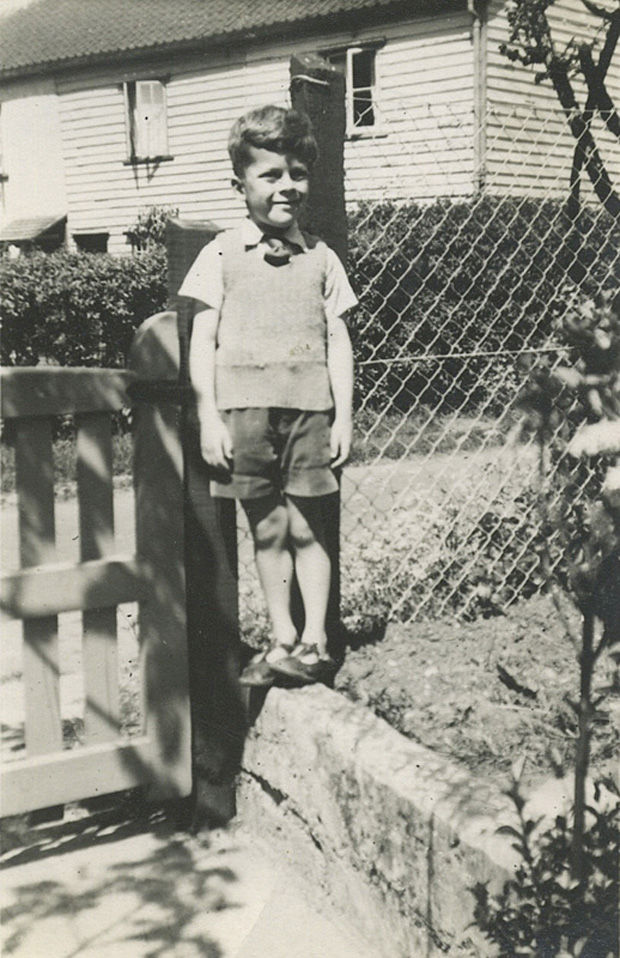
William, through a scheme with Rolls Royce, trained as a chauffeur and began spending more and more time away and the marriage suffered. So Peggy took their son and the two evacuees back to her mother's house in Mevagissey where they stayed until the end of the war. The evacuees returned home and Peggy and young Ianthen joined William in Switzerland where he had landed a driving job. They moved back to England in 1946 and William & Peggy's marriage fell apart, the difference in social class and education being a key factor. Ian kept his father’s surname – Dury.
After the war Pentillie House was sold. It became a hotel for a number of years and more recently has been turned into a number of apartments.
Young Ian, the wartime evacuee to Mevagissey, became most famous for being the lead singer with Ian Dury & The Blockheads who had two Top 10 albums, 2 Top 10 hits and this No 1 smash hit from January 1979 “Hit Me With Your Rhythm Stick”.
So it’s quite amazing just who was evacuated to Cornwall. Perhaps on another occasion I’ll tell of more famous evacuees in the county.
But until next month,
Shalom.


Comments