
August 2025
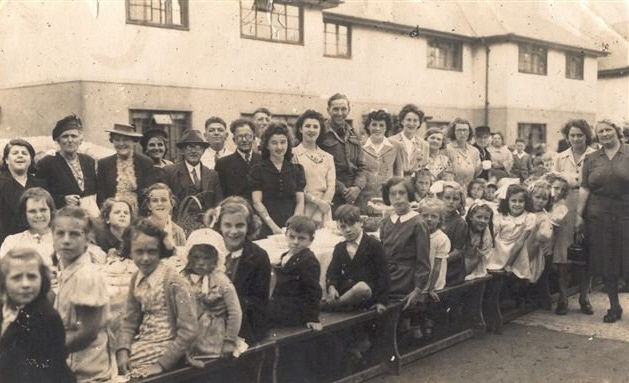

This month sees the commemoration of the 80th anniversary of VJ Day – Victory over Japan – which was first announced in the UK on 15th August 1945 when news of Emperor Hirohito’s broadcast to his people accepting the terms of the Potsdam Declaration was received. The formal signing of the surrender took place on 2nd September on the USS Missouri. The war in the Far East is often described as ‘The Forgotten War’ and few members of the public can tell you much about it other than the dropping of the atom bombs on Hiroshima and Nagasaki or make some reference to the film Bridge over the River Kwai. However, from the rapid spread of the Imperial Japanese Army from its initial invasion of China in 1933 across south-east Asia in 1941-42 which saw the loss of British colonies like Hong Kong, Singapore and the Malay peninsula, it led to some of the fiercest fighting of the war in battles like the ones at Imphal and Kohima where each side faced each other across the tennis courts of the Deputy Commissioner’s bungalow. Those battles saved India from invasion, showed the Japanese could be defeated in battle and began the long push back through Burma. The Shinto-Buddhist beliefs of the Japanese soldiers meant that surrender was not an option and so a bloodbath of an invasion of the Japanese islands was averted by the use of the atom bombs to bring the Japanese Emperor to the point of surrender and the swift end of the war in August 1945 saved countless lives of Allied POWs who were held in cruel and barbaric conditions in Japanese prisoner of war camps.

For many in Cornwall it was certainly not a ‘Forgotten War’ as their loved ones were out in the Far East involved in the fighting. For example, there were a number of Falmouth men who served on the ships HMS Repulse and HMS Prince of Wales. Both were sunk three days after Pearl Harbour on 10th December 1941. Among those lost on HMS Repulse was Petty Officer John Renfree Williams, age 22, of Falmouth. This former Grammar School student had survived the sinking of HMS Courageous earlier in the war, but his body was never found after the sinking of HMS Repulse. He is listed on the Roll of Honour in Falmouth Parish Church and on Panel 45 of the Naval Memorial on the Hoe, Plymouth.

Several Falmouth men survived the sinking of HMS Prince of Wales including P.G.O. Hellings, age 17, of Trevarth Road, Richard Dunstan of 23 Swanpool Street, Cyril Richards, age 30, of 31 Budock Terrace, and Ernest Lewarne, age 17, of 34 Highfield Road. Many of the survivors were able to clamber aboard HMS Express as their ship listed before it went down. Falmouth survivors from HMS Repulse were H.G.D. Thomas of 57 Killigrew Street, A.B. Hutson of 43 Tresawle Road, and W.J. Boulton of 3 Penwerris Lane.
The news from Hong Kong just before Christmas 1941 was equally disturbing. Sergeant Digby Collins Menhinnick was a Royal Marine from Falmouth who was serving on board HMS Tamar which was a troopship in harbour when the Japanese attacked. She was scuttled to prevent the enemy using her and her marines went ashore to fight alongside the army. Sgt Menhinnick was killed in action on 23rd December 1941 leaving a widow Caroline and a six year old daughter Jacqueline. He was initially buried in No 2 Crater, Borret Road. In 1947 he was reinterred in a mass grave in the Stanley Military Cemetery in Hong Kong.
For the Cornish families of men who were taken prisoner it was often two years before they heard any news of their men other than the initial confirmation they were “Missing”. Christmas 1943 brought a number of cards and messages arriving in Cornwall with the first confirmation they were still alive. For example, Lance Corporal W.M. Jory had held a mining appointment in Malaya and joined the Federated Malay Forces when the Japanese invaded. He was captured and had written a card to his parents at Wheal Prussia, Treleigh, Redruth to say he was safe and well.
Royal Marine Basil Glover had been missing since the fall of Hong Kong. On New Year’s Day 1944 his parents in Trelights, near Port Isaac, had received three letters and a postcard stating he was well and in Camp N.
On Christmas Eve 1943 the wife of Leslie Crowle in Tremar Combe near Liskeard received a postcard which stated he was in good health and was a prisoner of war.
At 27 Trelawney Road in Falmouth the wife of Leslie Champion was heartened by receiving a postcard saying he was a prisoner of war in Malaya and was well and in good spirits. I believe all four of these men survived the war and returned home to Cornwall.
Some men returned home scarred both physically and psychologically from their experiences at the hands of the Japanese. I remember walking in Barn Lane, Bodmin with my father in 1974 when he stopped to talk to a man who worked for the County Youth Service. I don’t quite know how the topic came up in the conversation but Dad spoke about the Japanese soldier who had just surrendered after 30 years in the jungle when this youthworker revealed to us that he had been a POW in a Japanese camp. It was the first time he had spoken about it in 30 years and soon the tears were streaming down his face as he described the guilt he felt at being powerless to help a fellow POW who was tortured to death by their captors. My father brought him home and listened to his outpouring of the pent-up anguish over a cup of tea – an act of kindness this man later told us saved him from the torment that was destroying him. It was an encounter that, having witnessed as an 11 year old, I have never forgotten.

When the war in Europe had ended attention turned to the Far East as many troops, ships and units were readied and dispatched to South-East Asia. Indeed at the RNAS St Merryn outpost at Treligga known as HMS Vulture II on the north Cornish coast near Trebarwith Strand. The 260 acre site had been requistioned by the Admiralty in 1940 as a gunnery and bombing range for the Fleet Air Arm based at St Merryn. In the autumn of 1944 the range was transformed to represent the Japanese held island of Tarawa (in the British Gilbert Islands) which had been liberated by US Marines in a fierce battle in November 1943. Tanks were brought by rail to Delabole and then driven through the village demolishing front steps, gates and a small building as they struggled through the narrow Cornish lanes. On the range a bridge and a convoy were located near an airstrip and a small railway was constructed to provide moving targets.
By December 1944 Treligga was being used for the intensive training of squadron commanders and senior pilots of units destined for the Pacific Fleet. This continued up until the surrender of Japan in August 1945. The site at Treligga was used for another ten years before closing in 1955.

For the families at home in Cornwall, when the news came that the war had finally come to an end and there was hope that their men, if they had survived, would be home in time, there was an outpouring of joy and celebration. Many of these families had felt they could not enter fully into the VE Celebrations that had occurred in May as for their menfolk the war was not over. So the flags and bunting went up again. A number of street parties were organised and towns and villages across the county celebrated. In Truro there was dancing in the streets and on Lemon Quay. Bodmin held a fancy dress competition for the children as well as numerous street parties.
Cornwall’s connection with the war in the Far East continued after the war. Today in the village of Portscatho, a small harbour village on the south coast of the Roseland peninsula, you will find a memorial that is “Dedicated to the 26,380 men killed in the Burma War who have no known grave being denied the rites accorded to their comrades in death. They died for all free men.” It was unveiled on The Lugger, Portscatho, on Thursday 7th May 1998 by the president of the Burma Star Association, Viscount Slim, son of Field Marshal William Slim who commanded the 14th Army. It was the first national monument of its kind to the thousands who died in action, but were never buried. The man behind the memorial was James Allan, 84 in 1998, who was a company commander in the 2nd Battalion Green Howards in Burma. Mr Allan was a founder member of the Burma Star Association and had moved to Portscatho in 1986. The ceremony was attended by over 300 veterans from various branches of the Burma Star Association.
The Portscatho VJ Day Memorial Service, is being held on 15th August 2025 at 3pm at The Burma War Memorial on The Lugger in Portscatho. Roseland residents and visitors are to be joined by representatives from the Royal British Legion for the service followed by refreshments at Portscatho United Church.
On VJ80 Day I shall be at the West of England Steam Engine Rally on the Stithians Showground with my exhibition of photographs of Cornwall in World War Two including those I have of Cornwall’s VJ Celebrations. If you come to the event, do drop in and say hello. I’ll be in the Rural & Bygones Section for the three days of the show.
Until next month, enjoy the summer but mark the commemoration in some way. It is the least we can do to honour the few veterans still with us and remember all those who served and especially those who gave their lives in the cause of freedom. Their war is not forgotten.


Comments